
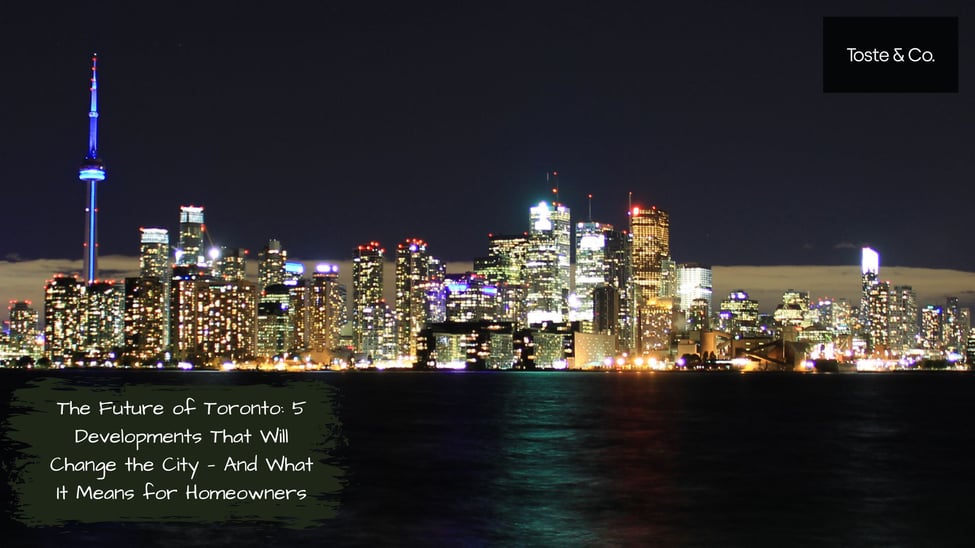
Toronto is entering a defining era — one marked by bold infrastructure, new communities, and a reimagined urban landscape. Over the next decade, the city will undergo some of the most significant changes in its history, reshaping how people live, work, commute, and invest. These aren’t incremental improvements; they are transformative, city‑shaping developments that will influence property values and neighbourhood desirability for generations.
Below is a deep dive into the five major projects that will redefine Toronto’s future — followed by a clear, homeowner‑focused breakdown of what these changes mean for you.
1. The Ontario Line: Toronto’s New Transit Spine
The Ontario Line is set to become one of the most impactful transit projects in the city’s history. Spanning 15.6 km from Ontario Place to the Ontario Science Centre, it will connect neighbourhoods that have long lacked rapid transit access.
Why this matters:
- Relieves pressure on the overcrowded Yonge–University Line
- Connects major employment zones and cultural districts
- Shortens commute times for thousands of residents
- Encourages new development along the corridor
Neighbourhoods like Riverside, Leslieville, Thorncliffe Park, and Flemingdon Park are already seeing renewed interest as the Ontario Line promises faster, more reliable transit — a key driver of long‑term property value.
2. East Harbour: Toronto’s Next Global Employment District
East Harbour is often described as “a second downtown,” and for good reason. This 38‑acre master‑planned district will become one of Canada’s largest employment hubs.
What’s coming
- Millions of square feet of office, retail, and commercial space
- A major transit hub connecting GO, TTC, and the Ontario Line
- Public plazas, green spaces, and waterfront access
- Tens of thousands of new jobs
This development will shift Toronto’s economic gravity eastward, creating new demand for housing in surrounding neighbourhoods.
3. Waterfront Revitalization: A New Era for Toronto’s Shoreline
Toronto’s waterfront is undergoing a dramatic transformation — one that blends sustainability, recreation, and modern urban design.
Key initiatives
- Villiers Island, a new mixed‑use community created through flood protection
- New parks, including Love Park and Leslie Lookout Park
- Reimagined public spaces, trails, and cultural destinations
- Climate‑resilient infrastructure to protect the city from flooding
What was once industrial land is becoming a vibrant, accessible, world‑class waterfront that enhances quality of life for residents and attracts global attention.
4. New Condo Communities: Vertical Neighbourhoods for a Growing City
Toronto’s population continues to rise, and the city is responding with thoughtfully designed, master‑planned communities that offer more than just housing.
Notable developments:
- The Well – a dynamic live‑work‑play district in King West
- Galleria on the Park – a revitalized community with parks and amenities
- Mirvish Village – a cultural and residential hub at Bloor & Bathurst
- Downsview Redevelopment – a multi‑decade transformation of over 1,000 acres
These communities integrate parks, retail, transit, and community spaces — creating complete neighbourhoods that support density without sacrificing livability.
5. Transit Expansions Beyond the Ontario Line
Toronto’s transit future extends far beyond a single project. A network of expansions is underway to improve regional connectivity.
Major projects:
- Eglinton Crosstown LRT
- Eglinton Crosstown West Extension
- Scarborough Subway Extension
- Yonge North Subway Extension
- GO Expansion with all‑day, two‑way service
These upgrades will open new areas for growth, reduce commute times, and support the city’s long‑term housing needs.
What This Means for Homeowners
Toronto’s transformation has direct implications for homeowners, investors, and future buyers. Here’s what to expect:
1. Transit Proximity Drives Value
Homes near new transit lines historically see higher appreciation. The Ontario Line and Crosstown extensions will elevate entire corridors.
2. Job Growth Fuels Housing Demand
East Harbour alone will bring tens of thousands of jobs — increasing demand for both ownership and rental housing.
3. Revitalized Neighbourhoods Become More Desirable
New parks, waterfront access, and modern communities enhance livability, making these areas more attractive to families and professionals.
4. Long‑Term Stability for Investors
Large‑scale infrastructure projects signal long‑term government commitment, creating confidence for homeowners and investors.
5. Early Buyers Benefit Most
Neighbourhoods in transition often offer better entry points. As projects complete, values typically rise.
Final Note
Toronto is not just expanding — it is evolving into a more connected, sustainable, and dynamic global city. The next decade will reshape the skyline, redefine mobility, and create new opportunities for homeowners and investors.
Understanding these developments today can help you make strategic, informed decisions about where to live, when to buy, and how to invest in Toronto’s future.
Remember, we at Toste & Co are always ready to help with any questions pertaining to the real estate market. We are just a phone call or email away.

