
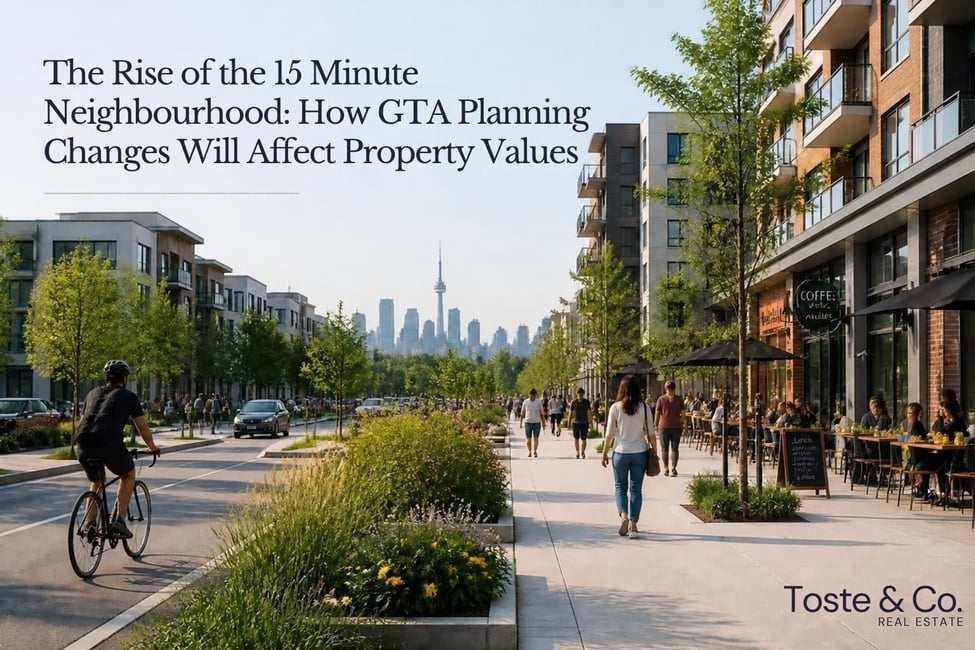
What Is a 15‑Minute Neighbourhood—and Why It Matters Now
Urban planners define a 15‑minute neighbourhood as a community where residents can access daily essentials—groceries, transit, parks, schools, cafés, healthcare—within a short walk.
Toronto’s planning direction for 2026 and beyond is clear: walkability is no longer a luxury; it’s a priority.
This shift is already influencing buyer behaviour, development patterns, and long‑term property values across the GTA.
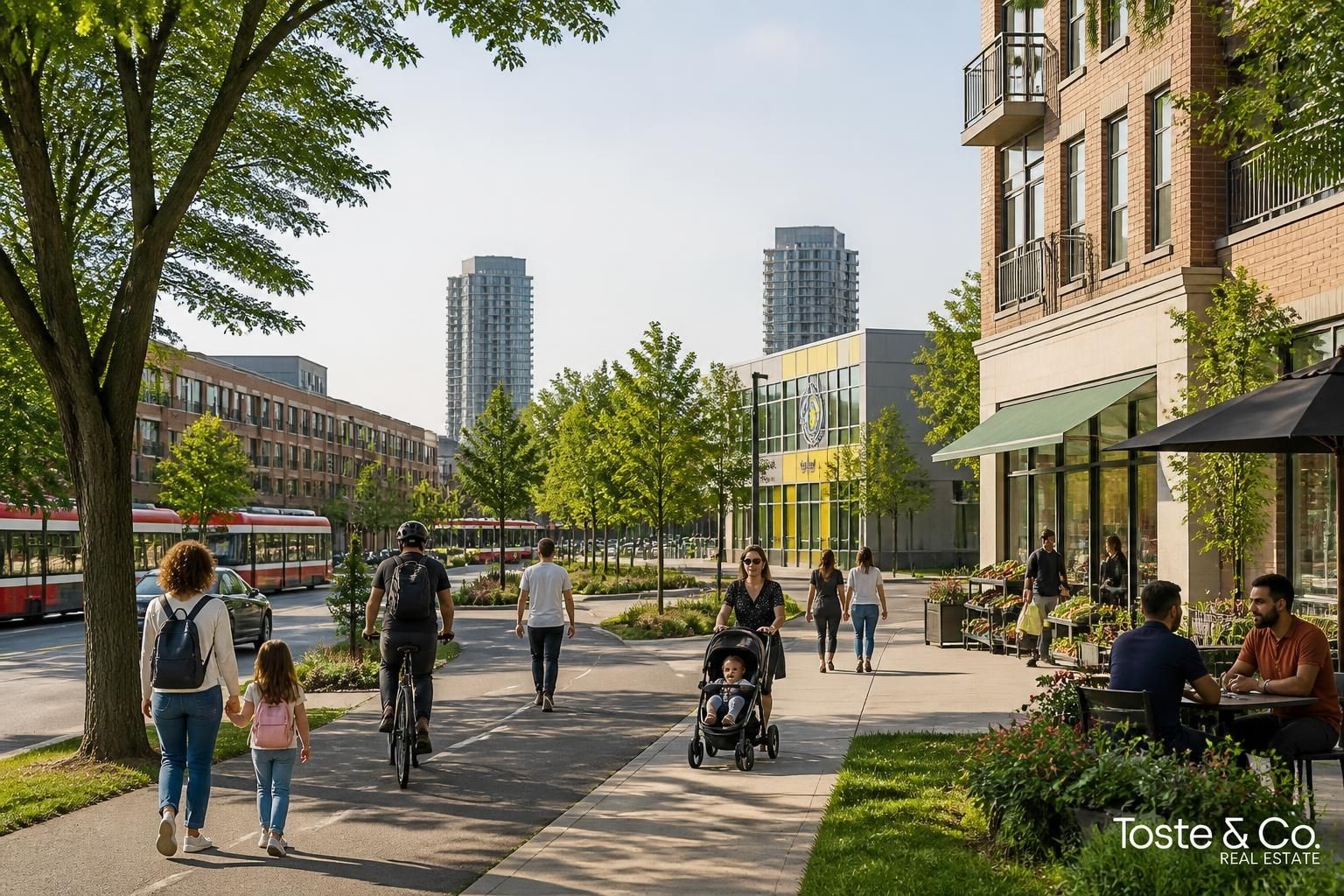
Toronto’s Push for Walkable, Connected Communities
The city is investing heavily in:
- Transit expansion (Ontario Line, Eglinton Crosstown, GO improvements)
- Mixed‑use development that blends residential, retail, and community spaces
- Pedestrian‑friendly streetscapes
- Cycling infrastructure and micro‑mobility options
- Local retail revitalization in emerging neighbourhoods
These changes support a lifestyle where residents spend less time commuting and more time living locally—a major selling point for modern buyers.
How Walkability Impacts Condo vs. Freehold Values
Condos: The Biggest Beneficiaries
Condos in walkable neighbourhoods typically see:
- Higher resale demand
- Stronger rental interest
- Premium pricing compared to similar units in car‑dependent areas
- Faster absorption rates when new inventory hits the market
Walkability is now one of the top three factors renters and condo buyers consider, alongside transit access and building amenities.
Freeholds: Stability with Selective Premiums
Freehold homes benefit too, but differently:
- Detached and semi‑detached homes near transit hubs command significant premiums
- Walkable suburban pockets (e.g., Port Credit, Downtown Markham) outperform car‑dependent suburbs
- Buyers increasingly value neighbourhood convenience over square footage
The trend is clear: walkability adds long‑term resilience to freehold values.
GTA Neighbourhoods Already Ahead of the Curve
Several communities are already functioning as 15‑minute neighbourhoods—and their property values reflect it.
Liberty Village (Toronto)
A fully walkable ecosystem with groceries, gyms, cafés, parks, transit, and retail steps from dense condo living. Strong rental demand and consistent resale performance.
Leslieville (Toronto)
Beloved for its village‑like feel, independent shops, transit access, and family‑friendly amenities. Freeholds and condos both benefit from high walkability scores.
Port Credit (Mississauga)
A waterfront community with restaurants, boutiques, parks, and GO Transit all within minutes. One of the GTA’s strongest examples of suburban walkability driving premium pricing.
What GTA Buyers Are Prioritizing in 2026
Buyer preferences have shifted dramatically:
- Shorter commutes and proximity to transit
- Local retail and dining
- Access to parks and recreation
- Neighbourhood identity and community feel
- Reduced reliance on cars
- Mixed‑use convenience (live, shop, dine, play)
Walkability is no longer a “nice to have”—it’s a value driver.
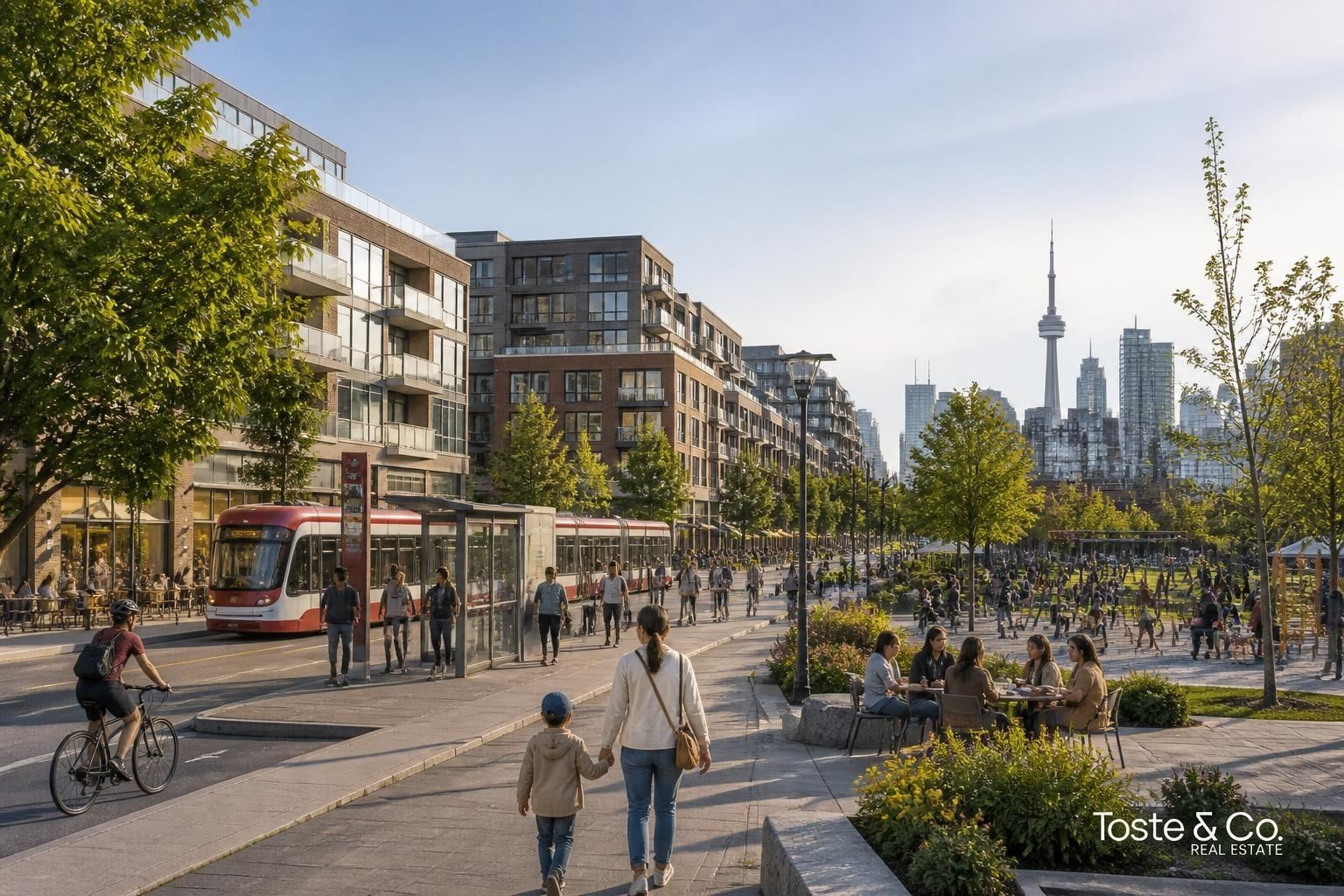
The Long‑Term Impact on Property Values
As Toronto and surrounding regions continue to invest in 15‑minute neighbourhood planning, expect:
- Higher demand in walkable pockets
- Price resilience during market slowdowns
- Premiums for homes near transit and amenities
- More mixed‑use developments shaping future communities
For buyers and investors, walkability is becoming one of the most reliable indicators of long‑term value.
Final Thoughts
The shift toward 15-minute neighbourhoods is reshaping the GTA market – and the winners are already clear. Homes in walkable, transit-connected communities are showing stronger demand, better resilience, and long-term value growth. As the region continues to invest in mixed-use, pedestrian-friendly planning, walkability will remain one of the most dependable indicators of future appreciation.
For buyers, sellers, and investors, the message is simple: choose neighbourhoods where daily life happens within a short walk, and you’re choosing long-term strength.